
Konzertgitarre
Die Konzertgitarre oder spanische Gitarre ist ein Musikinstrument aus der Familie der Chordophone. (Ein Chordophon ist ein Musikinstrument, bei dem der Klang durch die Schwingung einer zwischen zwei festen Punkten gespannten Saite erzeugt wird.) Es handelt sich um ein Zupfinstrument, das aus einem Hohlkörper mit einem Schallloch in der Mitte des Oberteils, einem Hals, an dem ein Griffbrett befestigt ist, und sechs Saiten besteht. In den Hals sind Bünde eingelassen, die es ermöglichen, das Klangkontinuum in 12 Noten des tonalen Systems zu unterteilen, was deren Interpretation erleichtert.
Die Gitarre ist das Ergebnis einer jahrhundertelangen Evolution der Chordophone. Der Ursprung des Chordophons ist Historikern und Forschern von den Zivilisationen Kleinasiens (Sumerer, Akkader, Assyrer...) um 2.500 v. Chr. bekannt. Seitdem haben sich Chordophone auf verschiedene Weise mit unterschiedlicher Anzahl von Saiten und Formen entwickelt. Einige Instrumente der Familie sind das Cuatro, die Ukulele, das Requinto, das Charango und verschiedene Arten von Guitarron, wie das mexikanische Guitarron, das oft von Mariachi verwendet wird.
Die Gitarre, wie wir sie heute kennen, ist das Erbe des von Antonio de Torres erfundenen Instruments, einem Gitarrenbauer aus der Stadt Almeria in Andalusien (Spanien). De Torres legte die modernen Kanons und Proportionen fest. Die heutige Konzertgitarre ist ein vielseitiges Instrument, das sowohl in der klassischen als auch in der populären Musik verwendet wird. Die Konzertgitarre ist das Hauptinstrument der populären Musik aus Spanien und Lateinamerika. Erwähnenswert ist die Bedeutung der Gitarre im Flamenco, einem Musikgenre, das im 18. Jahrhundert in Spanien entstand. Heutzutage verwenden Flamenco-Gitarristen meist eine Gitarre mit geringfügigen Konstruktionsabweichungen, die Flamenco-Gitarre genannt wird. Die Konzertgitarre ist auch unter Singer-Songwritern weit verbreitet.
Teile der Konzertgitarre
Die Gitarre hat im Laufe der Jahrhunderte Veränderungen in ihrer Form erfahren. Neben der Anzahl der Saiten entstanden Variationen des Instruments, die es ermöglichten, es an die Bedürfnisse des Musikers anzupassen, bis es seine moderne Form annahm. Die Gitarre wird fast vollständig aus Holz gebaut. Heute werden viele verschiedene Arten verwendet, am häufigsten jedoch Palisander aus Indien, Madagaskar und Brasilien, Tanne, Mahagoni, Zeder aus Kanada, Fichte, Zypresse (sehr beliebt bei Gitarren für Flamenco-Gitarristen) und Ebenholz. Heute unterscheiden die Erbauer zwischen der Konzertgitarre und der Flamenco-Gitarre. Dies liegt an der historischen Entwicklung dieser beiden Instrumente, die nicht nur mit dem Klang, sondern auch mit der sozialen Herkunft ihrer Interpreten zusammenhängt. Zypresse war ein reichlich vorhandenes und zugänglicheres Holz, was den Endpreis des Instruments beeinflusste und es für Musiker ländlicher und bescheidener Herkunft, die dem Flamenco verschrieben waren, zugänglicher machte. Andererseits war ein perkussiver Klang mit einem kraftvollen Attack ausreichend und geeignet, um den Cante in den lärmenden Madrider Cafés zu begleiten, in denen sich der Flamenco auszubreiten begann. Tatsächlich näherte sich die Flamenco-Gitarre der Konzertgitarre an, als sie begann, eine führende Rolle als Soloinstrument zu spielen.
Die Hauptteile der Gitarre: der Korpus, bestehend aus Decke und Boden, die an den Seiten durch die Zargen verbunden sind, der Hals mit Bünden, die Saiten, der Steg und zwei Einlagen (Sattel und Stegeinlage), über die die Energie der schwingenden Saite auf die gesamte Gitarrenkonstruktion übertragen wird, damit der Klang entsteht. Üblicherweise hat eine Konzertgitarre 6 Saiten. Einige Gitarristen spielen eine 7-saitige Gitarre, zum Beispiel in Brasilien oder Russland. Konstruktionstechnisch gehören sie im modernen Verständnis dieses Instruments dennoch zur Konzertgitarre.
Saiten für die Konzertgitarre werden aus Nylon oder Carbon hergestellt. Bass-Saiten haben eine Metallwicklung, für die dünner Draht aus verschiedenen Legierungen von Kupfer, Nickel, Silber und Wolfram verwendet wird.
Der Gitarrenkorpus besteht aus der Decke (meist aus Fichte oder Zeder, selten Tanne oder Zypresse), dem Boden und den Zargen aus der gleichen Holzart (meist Mahagoni, Palisander, Ziricote, Zypresse, Ahorn, Nussbaum), einer eingelegten Schalllochrosette und Innenteilen – Klötzen, Leisten, Futtern, Keilen oder Reifchen.
Entstehungsgeschichte der Konzertgitarre
Der Ursprung und die Entwicklung der Gitarre und ihrer Familie sind nicht ganz klar, da in der Antike viele ähnliche Instrumente verwendet wurden, daher wird der Entwicklungsweg dieses Instruments meist über bildliche und skulpturale Darstellungen verfolgt, die im Laufe der Geschichte gefunden wurden. Es gibt archäologische Belege in Basreliefs, die in Alaca Höyük (nördlich der heutigen Türkei) um 1000 v. Chr. gefunden wurden. Die Hethiter und Assyrer bauten Saiteninstrumente ähnlich der Lyra (das einfachste antike Saiteninstrument), jedoch mit einem Resonanzboden, die als Vorgänger der Gitarre gelten. Darstellungen eines Instruments, das einer Gitarre ähnelt, wurden auch auf Zeichnungen aus dem alten Ägypten gefunden.
Es gibt mehrere Hypothesen über den Ursprung der Gitarre. Eine schreibt ihr einen griechisch-lateinischen Ursprung zu und behauptet, dass die Gitarre ein Nachfahre der Fidicula ist. Eine andere der populärsten Versionen besagt, dass die Gitarre ein Instrument ist, das von den Arabern während der muslimischen Eroberung der Iberischen Halbinsel eingeführt wurde und später in Spanien erschien.
Beide Hypothesen haben einen etymologischen Hintergrund. Offenbar erreichten die ersten Chordophone die Griechen, die den Namen leicht zu Kithara oder Kettara verzerrten. Laut Corominas offenbart der Akzent den Ursprung des Wortes vom griechischen Wort kithára. Das Wort Kithara, aus dem später Citara (Zither) und schließlich Cedra (Zeder) im Spanischen wurde, wurde offenbar für ein Instrument ohne Hals (eher wie eine Leier) verwendet, während man annimmt, dass das griechische Wort für das Instrument verwendet wurde, dem zu Beginn unserer Zeitrechnung ein Hals hinzugefügt wurde. Viele Wissenschaftler und Musikwissenschaftler bringen die Ankunft der Gitarre in Spanien mit dem Römischen Reich um das Jahr 400 in Verbindung.
Eine andere Hypothese hat das arabische Wort qīārah als etymologische Grundlage, das eine Gitarre bezeichnet, die, obwohl sie ursprünglich aus dem Griechischen stammt, eher von arabischen Eroberern als von den Römern eingeführt worden sein könnte. Es gibt auch eine arabische Hypothese über den Ursprung der Laute, die besagt, dass das erste Instrument mit Hals der arabische Oud war, dessen Namen die Spanier schließlich fälschlicherweise mit ihrem Artikel verschmolzen: aus dem weiblichen „Oud“ wurde die männliche „Laute“. Es waren die Araber, die dieses Instrument in Spanien einführten, wo es sich entsprechend dem Musikgeschmack der unter arabischer Herrschaft stehenden Bevölkerung weiterentwickelte.
In Indien waren diese Instrumente im Sanskrit als Sitar bekannt. Der moderne Name stammt von zwei indoeuropäischen Wörtern ab, die das spanische Wort für Gitarre (Guitarra) hervorbrachten: die Wurzel guīt (aus der das Sanskrit-Wort guitá: „Lied“ entstand (wie in „Bhagavad Gita“, „Lied des Herrn“) oder sangīt: „Musik“) und die Wurzel tar, was „Saite“ oder „Akkord“ bedeutet.
Aus dem Mittelalter sind Quellen erhalten, aus denen im 11. und 12. Jahrhundert zwei Arten von „Gitarren“ unterschieden werden können. Einerseits die maurische Mandora, die die ovale Form einer halben Birne hat und dem arabischen Laud und der Mandoline ähnelt. Andererseits die lateinische Gitarre mit flacher Decke und einem Hals, dessen Wirbelkasten dem einer Violine ähnelt. Der erste dieser Typen stimmt mit der Hypothese des orientalischen Ursprungs der Gitarre überein, einer Variante der assyrischen Laute, die sich über Persien und Arabien ausbreitete, bis sie während der islamischen Präsenz auf der Iberischen Halbinsel Spanien erreichte. Der zweite Typ stützt die Hypothese des griechisch-lateinischen Ursprungs des Instruments. Beide Typen sind in den Miniaturen der Cantigas de Santa María von Alfons X. dem Weisen (Alfonso X el Sabio) von 1270 dargestellt, noch ältere Abbildungen, die in Westeuropa erhalten sind, befinden sich im römisch-katholischen Kloster Zwiefalten (heute Deutschland) и datieren auf das Jahr 1180.
Im 14. Jahrhundert verwenden die mittelalterlichen französischen Dichter Guillaume de Machaut und Eustache Deschamps in ihren Werken den Namen „Guiterna“, es ist jedoch nicht klar, welcher der oben genannten Instrumententypen gemeint ist.
Die lateinische Gitarre entwickelte sich zu zwei verschiedenen Instrumenten: der Vihuela, die mit sechs Doppelsaiten ausgestattet war (Vihuelas waren beim Adel und bei professionellen Troubadouren und Musikern weit verbreitet), und der Gitarre mit vier Doppelsaiten, die populärer war.
Im 16. Jahrhundert begann man in Spanien, zahlreiche Kompositionen für die Gitarre zu schreiben. Das erste bekannte Werk für eine viersaitige Gitarre findet sich in der Komposition „Tres libros de música en cifra para vihuela“, die 1546 von Alonso Mudarra in Sevilla veröffentlicht wurde. Zu dieser Zeit war es üblich, die Namen dieser Instrumente zu verwechseln, und erst am Ende des Jahrhunderts begann man, sie zu unterscheiden. Die Gitarre wurde hauptsächlich als Begleitinstrument und primär in der Rasgueado-Technik verwendet.
Im 17. Jahrhundert erschien die älteste bekannte Abhandlung über die spanische Gitarre, die 1596 von Juan Carlos Amat unter dem Titel „Guitarra española de cinco órdenes“ in Barcelona veröffentlicht wurde. Im Jahr 1606 veröffentlichte Girolamo Montesardo in Bologna das erste große Werk für Gitarre mit dem Titel „Nuovaventione d 'per sonare. Il Balletti Involatura espagnuola sopra la chitarra und GA Colonna Intavolatura alla chitarra di spagnuola“ im Jahr 1620.
Obwohl alle Länder ihre Beteiligung an der Erfindung der Gitarre beanspruchen (mit besonderer Erwähnung Frankreichs), stammen Aspekte wie Form, Struktur und Stimmung direkt von der Gitarre ab, wie sie von iberischen Instrumentenbauern geschaffen wurde, ohne Europäer wie Johann Stauffer zu vergessen, von dem die Entwürfe seines Schülers C. F. Martin übernommen wurden. Die Hinzufügung der fünften Saite wird dem Musiker und Dichter Vicente Espinel aus Malaga zugeschrieben (Ronda, 1550). Diese Erfindung wurde von Lope de Vega Espinel zugeschrieben, aber von Nicolao Doizi de Velasco (1640) und Gaspar Sanz (1684) in ihren Abhandlungen über die spanische Gitarre widerlegt. Ihre Behauptungen werden durch die Tatsache gestützt, dass elf Jahre vor Espinels Geburt Bermudo eine Gitarre mit fünf Saiten erwähnte. Obwohl Espinel nicht der Erfinder der spanischen fünf-saitigen Gitarre war, war er wahrscheinlich derjenige, der am meisten für ihre populäre Verbreitung in allen Gesellschaftsschichten in Spanien verantwortlich war. Gaspar Sanz drückt seinen Respekt im Vorwort seines Buches „Instrucción de música über die spanische Gitarre“ aus.
Andere Autoren leisteten bedeutende Beiträge zur Literatur der Gitarre, zum Beispiel Luis de Briceño im Jahr 1626, Lucas Ruiz de Ribayaz und Francisco Guerau. Auf der Iberischen Halbinsel war die Gitarre bereits am Ende des 17. Jahrhunderts weit verbreitet, als Gaspar Sanz seine „Instrucción de música sobre la guitarra española y método de sus premiers rudimentos, hasta tañerla con destreza“ komponierte.
In jedem Fall scheint klar zu sein, dass die Gitarre in Spanien ihren Charakter erhielt, denn im Gegensatz zu den in anderen europäischen Ländern gebauten Gitarren waren diese so überladen mit Intarsien und Ornamenten, dass das Spielen praktisch unmöglich war. Gleichzeitig wurde die spanische Gitarre zum Spielen geschaffen und wurde zu einem so populären Instrument, dass sogar Sebastián de Covarrubias, Kaplan von Philipp II. und spanischer Lexikograph, sagte: „Die Gitarre ist nicht mehr wert als eine Kuhglocke, sie ist so einfach zu spielen, dass es keinen Bauern gibt, der nicht Gitarrist werden könnte“.
Romantische Gitarre
Anfang des 18. Jahrhunderts fügte Jacob Otto der Gitarre eine sechste Saite hinzu, und die moderne Stimmung wurde standardisiert, was die bedeutendste Änderung war, die dieses Instrument erfuhr. In der Mitte des 19. Jahrhunderts erreichte die Geschichte der modernen Gitarre mit dem Spanier Francisco Tarrega, dem Schöpfer der modernen Schule und Autor von Änderungen in der Handhaltung und der Art des Saitenanschlags, einen Höhepunkt.
Romantische Gitarre. Um 1830.
Im späten 18. und frühen 19. Jahrhundert verwendeten einige Gitarren sechs Einzelsaiten, und in der Konstruktion wurden Balken unter der Decke verwendet. Diese Balken wurden zur Verstärkung der Konstruktion hinzugefügt und ermöglichten es, die Decke für eine größere Resonanz und eine bessere Klangverteilung dünner zu machen. Andere Neuentwicklungen umfassten die Verwendung eines erhöhten, verstärkten Halses aus Ebenholz oder Palisander sowie das Aufkommen einer Metallschraubenmechanik anstelle von Holzwirbeln. Es ist wichtig anzumerken, dass das erhöhte Griffbrett einen großen Einfluss auf die Spieltechnik hatte. Die Saiten waren zu weit von der Decke entfernt, so dass man einen Finger der rechten Hand aufstützen musste, um die anderen zu stützen.
Moderne spanische Konzertgitarre
Zu Beginn des 19. Jahrhunderts finden wir in den Arbeiten der Spanier Agustin Caro, Manuel Gonzalez, Antonio de Lorca, Manuel Gutierrez und anderer europäischer Meister, darunter René Lacote und der Wiener Johann Stauffer, die Merkmale der direktesten Vorläufer der Konzertgitarre. Johann Stauffer genießt einen legendären Ruf. In seiner Werkstatt lernte C. F. Martin den Bau von Gitarren, der später in die USA auswanderte und dessen Firma noch heute Gitarren herstellt. Stauffer entwickelte auf Wunsch von Luigi Legnani, einem Gitarristen und ersten Interpreten der Konzerte des genuesischen Geigers Niccolo Paganini, ebenfalls ein erhöhtes Griffbrett. Zu den weiteren Errungenschaften im Gitarrenbau gehören ein verstellbarer, mit einem Stahlstab verstärkter Hals und Wirbel mit Schneckengetriebe, die noch heute in modernen Gitarren verwendet werden.
Im 19. Jahrhundert begann sich die Gitarre in Form und Abmessungen dem heutigen Stand anzunähern. Im Süden Spaniens begannen einige Meister wie Manuel Soto und Solares um 1850 Instrumente mit größeren Möglichkeiten zu schaffen, als Antonio de Torres seine Arbeit aufnahm. Er wurde schließlich zum Meister, der die kanonischen Maße der modernen Konzertgitarre festlegte. Unterstützt von Julian Arcas perfektionierte Antonio Torres Jurado in seiner Werkstatt in Almeria die strukturellen Teile der Gitarre, indem er sieben Holzleisten – eine Fächerbeleistung unter der Decke – einbaute. Auch die Größe der Decke und die Breite des Halses nahmen zu. Diese Innovationen beeinflussten die Verbesserung der Klangstärke und der Bässe sowie die Eröffnung der Technik der linken Hand zur Bereicherung des Repertoires. Nun war die Gitarre sowohl für den Solisten als auch für das Instrumentalensemble bereit.
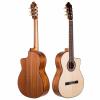
821,10 €
(690,00 € ohne MwSt*)
928,20 €
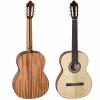
821,10 €
(690,00 € ohne MwSt*)
899,64 €
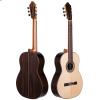
1.106,70 €
(930,00 € ohne MwSt*)
1.169,77 €
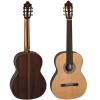
1.059,10 €
(890,00 € ohne MwSt*)
1.169,77 €
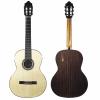
1.199,52 € (1.008,00 € ohne MwSt*)
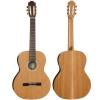
798,49 € (671,00 € ohne MwSt*)

2.299,08 € (1.932,00 € ohne MwSt*)
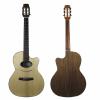
1.499,40 € (1.260,00 € ohne MwSt*)
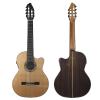
1.599,36 € (1.344,00 € ohne MwSt*)
1.399,44 € (1.176,00 € ohne MwSt*)